- Where
- Room 3 · Listen to the people, Skellefteå Museum
- You
- Listen. Then say what you think.
- Built with
- 20 channels of real-time audio · Berget AI · Custom Python · WLED
01 The idea
Listen to the people
In 2013, Skellefteå held a citizen dialog about the town’s future. Ten questions. Many voices.
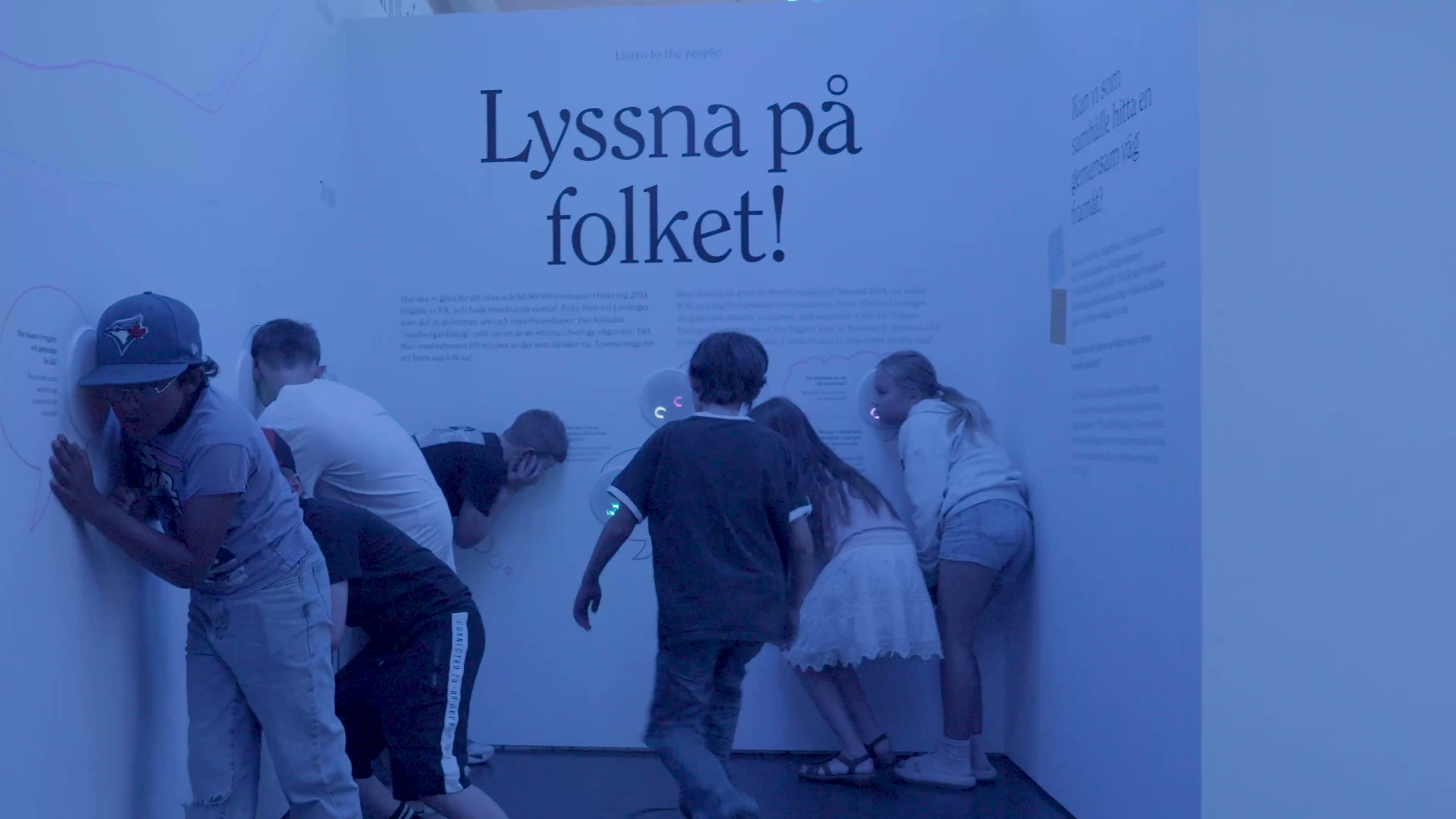
Before you get to say anything, you listen. Ten speakers sit in the wall, one per question, playing the answers from back then. Put your ear to one.
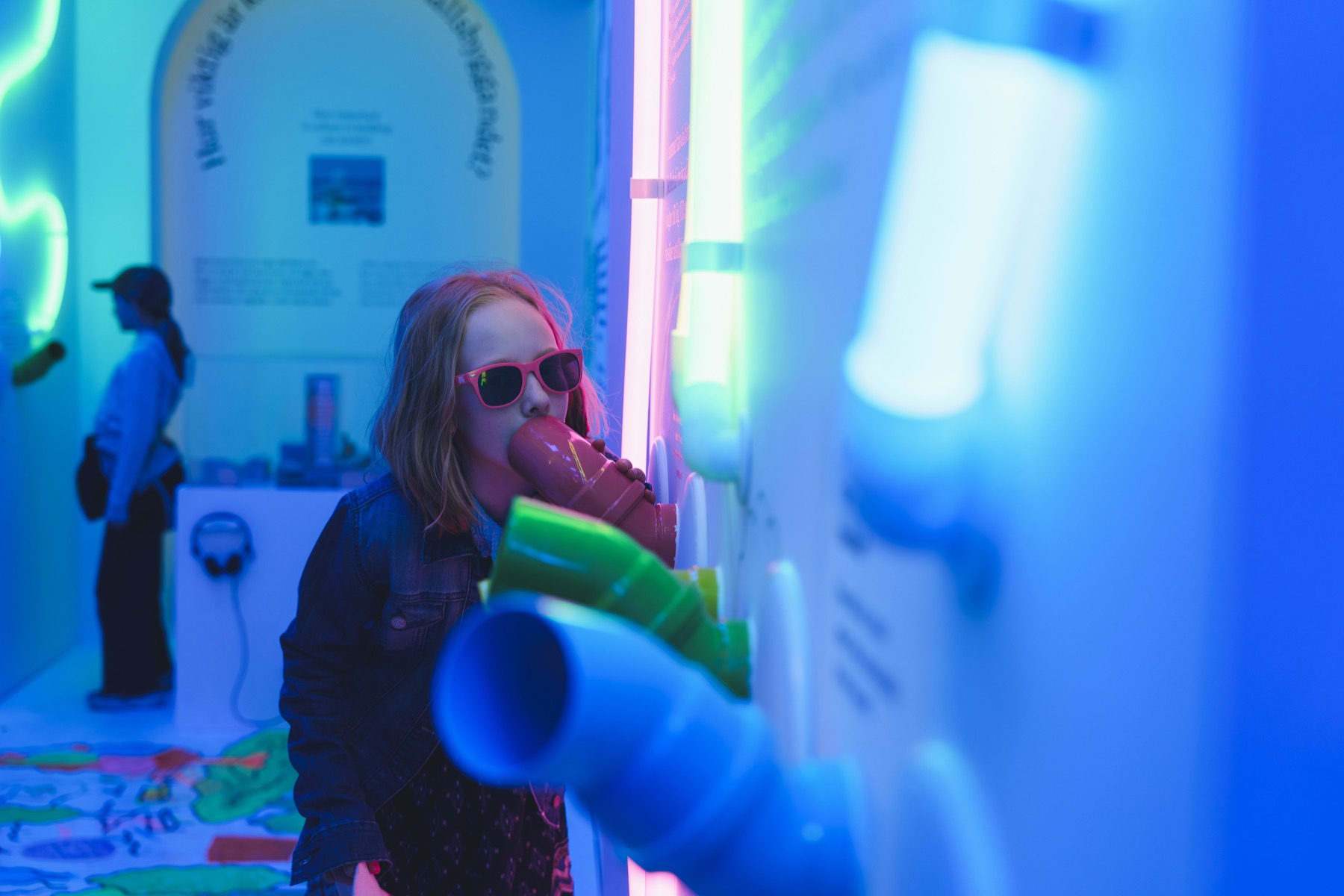
Then you turn the corner, and the same questions are waiting for you. Ten coloured panels, ten open microphones. No button, no app, no screen. You just talk.
The panel lights up in its colour while you speak. If your answer is an answer, it joins the wall, and plays alongside the voices from 2013.
An archive of what a town thinks, growing every day the museum is open.
02 The questions
Ten questions
- Hur skapar vi trygghet och gemenskap för alla?
- Om Skellefteå fick en extra miljard – vad är det viktigaste att satsa på då?
- Vad gör dig stolt över Skellefteå idag?
- Hur ser vi till att alla får göra sin röst hörd?
- Om du fick bestämma i Skellefteå, vad är det första du skulle göra?
- Hur ska vi resa smart och hållbart i framtiden?
- Hur ser vi till att alla kan hitta ett bra hem här?
- Vad oroar dig med framtiden?
- Vad drömmer du om för Skellefteå?
- Hur ser vi till att hela Skellefteå – stad och land – kan växa och må bra?
03 How it works
From voice to wall
- Always listening. All ten microphones record into a rolling buffer, so the first word is never lost.
- Is that speech? A gate waits for sound well above the room, then a voice detector checks that it is a person, talking, for at least half a second.
- Is it from this pipe? Sound bleeding in from the next installation is rejected before any AI gets involved.
- Transcribe. KB-Whisper, the National Library of Sweden’s speech model, writes it down. It’s told how to spell Skellefteå’s own names.
- Judge. A language model asks: does this answer the question? The bar is set low on purpose. More voices, not better ones.
- Play. Every speaker builds a short playlist that favours the newest answers, mixes short and long ones, and crossfades between them.
04 Under the hood
20 channels, in the EU
- Two Behringer UMC1820s: ten mic inputs, ten outputs for the new answers and ten for 2013. Custom Python on a Mac mini.
- The past and the present each have their own knob on the curator’s controller, so a guide can fade one down to talk.
- Transcription and judging run on Berget AI, so the voices stay in the EU.
- The gate was tuned on site by recording a real walk-through and replaying it against the settings: 10 out of 10 answers caught, no false alarms, no bleed.
- Playback is levelled below the microphones’ trigger, so the wall never answers itself.
- A walk-around tool plays pink noise from all ten speakers and balances them live, one step at a time, from a phone.
- WLED strips light each panel while it hears you. Every clip is backed up every night.

Got something big to say? Let’s make it a place.
Linus Johansson · [email protected] · The whole exhibition, room by room